

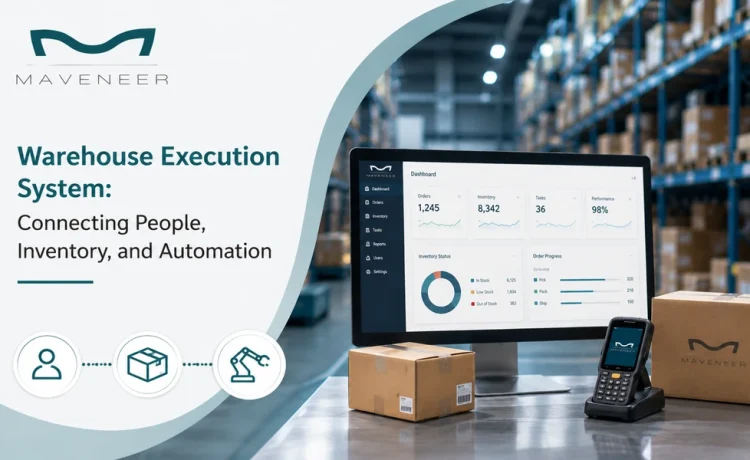
Even with the right number of workers, storage space, and technology in a warehouse, delays may still occur. The issue is rarely a shortage of resources. It is the driving factor of how those resources work together.
A warehouse execution system helps synchronize real-time. It is unifying orders, inventory, workers, equipment, and automation to allow tasks to flow through the facility with less friction.
Where Warehouse Operations One Place to Slow Down?
Delays may be small, but when it comes to filling orders in a busy warehouse, they can escalate very quickly.
A wait on an order might mean that an item has not yet been picked. An employee will waste too much time traveling from point A to point B. Supplemental automatic equipment is available but poorly synchronized with other activities.
These issues can affect:
- Order processing speed
- Labor productivity
- Inventory accuracy
- Equipment utilization
- Customer delivery times
The problem becomes keeping these disparate moving pieces in alignment.
One System, Many Decisions
A warehouse execution system (WES) is functioning as a middle layer for daily warehouse activity coordination. You can even use real-time information to understand which tasks are sure to be accomplished and at when
To quickly respond to multiple orders, the system may prioritize work in different ways (such as order deadlines vs available inventory or warehouse conditions etc.).
It could eliminate unnecessary commuting and enable teams to focus on work that matters most.
From Data to Action
Warehouse software usually assembles a lot of data. However, the mere availability of information does not guarantee its utilization in operations.
That information needs to be transformed into useful actions in order for there to be value.
An example of the type of practical questions that a warehouse execution system can help answer is:
- Engraving order selection − which order first?
- Who should do the work or which machine?
- Where should inventory be moved?
- How can better use be made of all the equipment available?
Through these coordinated decisions, it provides a more streamlined work process.
Working with Automation
Warehouses can include conveyors, automated storage system, robotic equipment, scanners, and other modern technologies in the case of keeping warehouses. The unique role each system may fulfil.
Automation may introduce bottlenecks instead of eliminating them without appropriate orchestration.
The key is a warehouse execution platform that links the physical equipment with the role of specific tasks going on in the warehouse. It is able to sync up activities since priorities can shift unexpectedly, achieving goals in the process.
This comes in handy especially during sales events, holidays, or peaks of season were volumes fluctuate.
What Businesses Can Gain?
A good system can achieve higher performance in the warehouse without necessarily adding more workers or square footage.
Potential benefits include:
These effects hinge on the fit of the system to warehouse processes and solution implementation itself.
Building a More Connected Warehouse
Warehouse efficiency depends on coordination. People need clear tasks. Machines need accurate instructions. Inventory should be present when required. Orders need to keep moving.
Real-time information guides execution, which is how a warehouse execution system brings all of these activities closer together.
If your warehouse wants to achieve a faster speed, improved visibility, and better resource utilization, it may well give you some of the coordination necessary to knit together formerly separate processes into a single connected operation.