

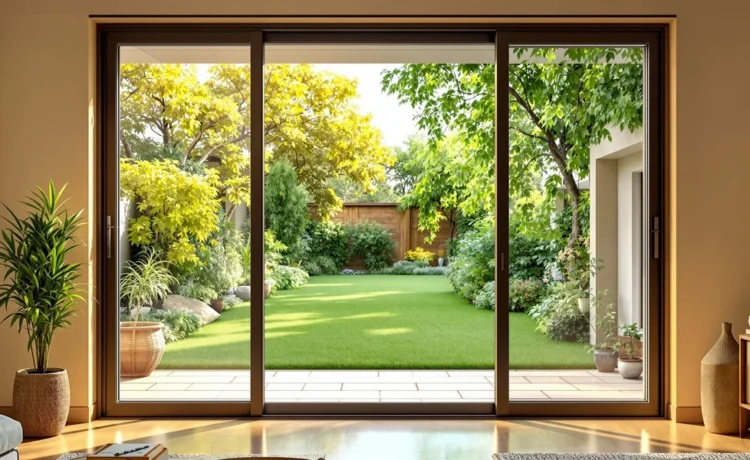
Most people pick a patio door with their eyes. They see a wide glass panel in a magazine spread, picture their living room with that light pouring in, and start measuring. Then the door arrives, the room bakes on summer afternoons, the slider sticks by month six, and nobody in the house opens it unless the dog insists.
I have watched this play out more than once. The smart move is to make four decisions in a fixed order before you spend a dollar: traffic pattern, glass, frame, then installation. If you want to skip the browsing phase and look at real units, shop doors at Fischer to see the categories side by side, but read the rest of this first. The order is what saves you from a very expensive regret.
What follows is the sequence I would use in my own house, written for a room people actually live in, not a showroom photo.
Start with the traffic pattern, not the glass
Ask a boring question: who walks through this opening, how often, and carrying what? A door to a grill, a pool, or a dog run sees different use than one that mostly frames a view from the sofa.
Sliders suit a narrow room where a swinging panel would clip a chair. They also handle high traffic well because the motion is one push and a glide. Swinging doors make more sense when you want the whole opening clear on a cool evening and you have the floor space to sweep a panel inward or out. Folding and lift-and-slide setups fit wide openings, but each panel adds track hardware you will eventually clean.
Here is the test I would run before choosing. Take a roll of painter’s tape and mark the swing arc or slide path on the floor for one full week. Count how many times someone in your house would trip over tape that isn’t there. You will get a real answer, and it takes about ten minutes.
The glass does more work than the frame
Glass is where door conversations go wrong, because people compare brands before they compare coatings. A standard dual-pane unit with a low-emissivity coating and argon between the panes performs very differently from clear glass in the same frame. The coating reflects heat, the gas slows conduction, and the combination matters more than the label on the sticker.
This is the one place to spend up. You will notice the difference on the west-facing wall every July. The Department of Energy documents how window coatings and gas fills cut heat gain, and the same principles apply to a full glass door. If you live in a climate with brutal summers or windy winters, ask a dealer to show you the actual glass spec on the unit, not a brochure claim.
My stance: skip the fanciest frame and buy the better glass. Frames are a visual preference. Glass is a comfort decision you feel daily.
Match the frame to your weather and your weekends
Frames come down to three families, and each one asks something different of you.
- Vinyl: affordable, low maintenance, and a good fit if you’d rather not think about your door again for a decade.
- Fiberglass: strong against temperature swings and dents, and a sensible pick where the door takes a beating from sun or kids.
- Wood: warm and beautiful, but it wants periodic care and a roof overhang that keeps rain off the sill.
Think about your actual weekends. If “resealing a sill each fall” sounds like a chore you’d skip, vinyl or fiberglass earns its place. The National Association of the Remodeling Industry notes that exterior door replacement is one of the projects homeowners return to most often, which is an argument for picking a material you’ll happily keep for twenty years instead of five.
Installation quality decides whether any of this works
A perfect door in a sloppy opening leaks air and water regardless of what the sticker promised. So the last decision isn’t really about the door at all. It’s about who sets it.
Ask three things before you sign: who measures the opening, who pulls the permit if your town requires one, and who handles a callback if the door settles or the seal fails. Local dealers who install their own product usually answer all three without flinching. A big-box special order sometimes can’t answer the second one at all.
Installation crews also matter for older homes. Brick veneer and stucco openings need flashing details tuned to the wall assembly, and a crew that only works on new construction can miss that. The National Association of Home Builders covers the general case for exterior door detailing, and it’s worth a skim before you talk to anyone with a clipboard.
A door is a system: opening, flashing, frame, glass, hardware. Weakness in any one piece shows up as a draft, a leak, or a stuck panel.
Run the showroom test before you commit
Pictures lie about scale. A showroom visit fixes that in about thirty minutes, but only if you do these five things while you’re there.
- Open and close the door three times with one hand. Count the effort. If it needs two hands in the showroom, it will need a shoulder at home.
- Stand at the closed door and look for daylight at the sill and the side jambs. Any visible gap is a red flag on hardware alignment.
- Ask who makes the glass and what the spec is. A vague answer is a real answer.
- Ask who installs it and whether they measure the opening themselves.
- Walk one full lap around the unit and look at the track, the rollers, and the weatherstripping. If you can’t find the drainage weep holes, ask where they are.
The framework I’d use at home
Here’s the whole thing in one pass. I call it the four-lock check: traffic, glass, frame, installer, in that order. Each answer narrows the next, and you never fall in love with a door that won’t work before you know it won’t work.
If you want one concrete scenario: a west-facing family room, two dogs, a narrow walkway to a patio, and a strong preference for low maintenance. The four-lock check answers that as a high-traffic slider with a quality low-emissivity glass package and a vinyl or fiberglass frame, installed by the same company that measured the opening. Not the glamorous pick. The right one.
You’ll know the choice is correct when nobody comments on the door after the first week. It just works, the room stays comfortable, and the dog pushes through it without a second thought.
Bring your room to the door decision
Everything above comes down to one habit: decide in order, and let the answers point to the product. Your room, your traffic, and your climate already eliminated half the catalog before you walked into it.
If you’re near St. Louis, walk into a showroom with your painted-tape notes and your dog count, and ask the questions on this list out loud. Then close the door behind you and picture it on a hot July afternoon. Would you still pick it?