

Key Takeaways
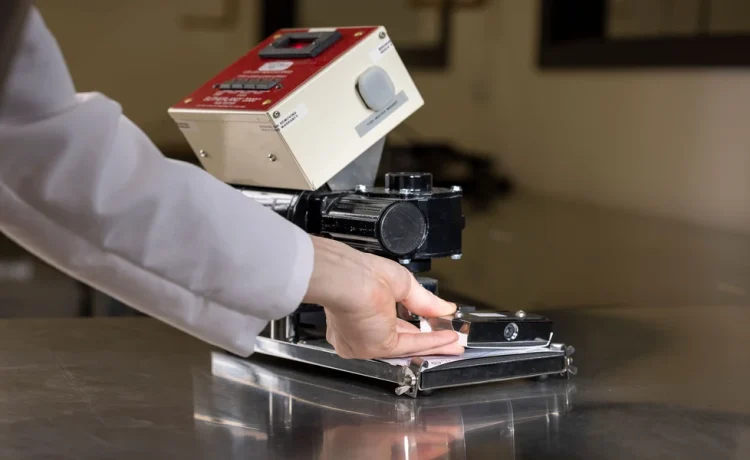
Fundamental in gauging the abrasion resistance of various materials, the Sutherland Rub Tester plays a pivotal role in textiles, coatings, and plastics. It simulates wear conditions, allowing manufacturers to forecast durability and refine designs ahead of launching products into the market.
Core components like the rubber abrasion wheel, a weighting system, and a user-friendly control panel collaborate to deliver accurate and repeatable testing results, each tailored to specific material types.
For dependable outcomes, adherence to consistent testing procedures is a must. This includes proper sample conditioning and rigorous documentation of the testing parameters, which underpins comparative analysis.
Industries such as textiles and automotive greatly benefit from the Sutherland Rub Tester, as it helps meet durability standards for fabrics and interior materials. Additionally, graphic arts firms utilize it to enhance the performance of printed materials against wear.
Regular maintenance actions, including monitoring wear on rubber wheels and ensuring cleanliness in the testing environment, are essential for preserving the long-term accuracy and reliability of the Sutherland Rub Tester.
Interpreting results from this device should involve a comparison against historical data to uncover trends. This empowers manufacturers to proactively refine product formulations and designs.
Looking ahead, advancements in rub testing technology could see automated processes and data analytics integration, potentially leading to rapid, accurate results that cater to evolving manufacturing demands.
Maximizing Durability: How the Sutherland Rub Tester Works
The Science Behind Abrasion Resistance Testing
Abrasion resistance testing stands as a crucial element of quality control across diverse industries. It’s not merely about determining what wears down; it’s about understanding how different materials interact with varying friction forces. The Sutherland Rub Tester, for instance, evaluates textiles, coatings, and plastics under simulated wear conditions. By applying controlled pressure and movement, manufacturers can predict their products’ performance during everyday use. This structured approach guarantees products meet desired performance standards before entering the market.
The foundational science connects to material properties like hardness, flexibility, and surface finish. Subjecting products to repeated rubbing generates data that reveals potential weaknesses. For clients, this connection between data and durability can drive significant advancements in product design and lifespan.
Interestingly, the range of tested materials is vast. From upholstered furniture to automotive interiors, the array of applications is diverse. Recognizing these nuances is vital for creating superior products that withstand the test of time.
Key Components of the Sutherland Rub Tester Explained
Central to the Sutherland Rub Tester are several essential components that work together to yield dependable results. Initially, the rubber abrasion wheel is key; it comes in various grades, thus permitting tailored testing depending on material specifications. Next, the weighting system ensures that the pressure applied during tests is precise, mirroring realistic conditions. These components, when paired, enhance both the accuracy and repeatability of testing.
The control panel may often be understated, yet it’s where much of the operator’s control lies. Here, users can configure testing parameters like speed and cycles to suit their needs. This combination guarantees manufacturers gain valuable insights regarding the wear characteristics of their materials.
Calibration is another area that should not be overlooked. Routine checks are vital for maintaining accuracy over time. Regular adjustments keep the machine in peak condition, ensuring results reflect true performance capabilities.
Understanding Test Procedures for Consistent Results
Test procedure consistency is paramount. When operating the Sutherland Rub Tester, professionals advocate adhering to strict protocols for sample preparation and machine calibration. Such diligence helps ensure tests yield reliable data. Typically, samples need to be conditioned under specific environmental conditions, including temperature and humidity, to accurately replicate real-world scenarios.
Testing commences by securing the sample on the platform, ensuring stability during the process. The machine then initiates a rubbing motion by pressing the sample against the rubber wheel. Keeping detailed records of completed cycles and applied weight is crucial, providing the basis for subsequent analysis.
- Condition samples adequately for precise outcomes.
- Regularly calibrate the Sutherland Rub Tester to preserve accuracy.
- Document all test parameters and conditions for comprehensive reporting.
Such meticulous steps ensure every test remains comparable, offering manufacturers a robust foundation for making informed decisions regarding material durability.
Real-World Applications: Who Benefits from Using the Sutherland Rub Tester?
Industries Relying on the Sutherland Rub Tester for Quality Control
Diverse sectors significantly gain from the Sutherland Rub Tester, making it an essential tool for any industry focused on durability. Within the textile industry, for example, it is utilized to ensure fabrics can withstand regular wear. In automotive manufacturing, where interior materials face constant exposure and friction, rigorous testing proves crucial.
The graphic arts and printing industries also employ this device to assess the resistance of printed materials to rubbing and scratching. Each application possesses its own set of requirements, yet all share a common goal of maintaining quality standards.
- Textiles: Evaluating fabric durability.
- Automotive: Assessing upholstery and material impacts.
- Manufacturing: Upholding quality in composite materials.
With the Sutherland Rub Tester, these professionals can meet both regulatory standards and consumer demands effectively.
Case Studies: Meeting High Standards in Textiles and Printing
Take, for example, a textile manufacturer that relies heavily on the Sutherland Rub Tester. Their commitment to rigorous testing has allowed them to enhance their product lineup, ensuring that fabrics not only comply with industry durability standards but also resonate with consumers seeking lasting quality.
In another instance, a printing company encountered challenges with ink adherence. By incorporating the Sutherland Rub Tester into their workflow, they managed to optimize their ink formulations, ultimately producing prints that resist abrasion better than competitors. Such case studies highlight the real-world impact of this testing methodology – it’s not merely theoretical; it leads to tangible improvements in quality.
Why Manufacturers Choose the Sutherland Rub Tester
Manufacturers frequently conclude that selecting the Sutherland Rub Tester equates to choosing unparalleled reliability in testing. But what drives this preference? Its enduring reputation, built over decades of consistent performance, stands out. Clients appreciate the accurate comparisons between products it facilitates.
This ability allows them to respond quickly to market demands. Equipped with a Sutherland Rub Tester, manufacturers can foresee failures before they occur, sidestepping costly mistakes and fostering an improved bottom line.
- Durability: Designed to withstand routine use.
- Precision: Trustworthy results lead to informed decision-making.
- Cost-Effectiveness: Minimizes waste by thwarting product failures.
Ultimately, the assurance that a robust quality control framework is in place brings significant peace of mind.
Improving Operational Efficiency: Best Practices for Sutherland Rub Tester Users
Routine Maintenance Tips to Enhance Performance
To maximize the lifespan and efficiency of the Sutherland Rub Tester, effective maintenance practices are critical. Professionals highlight how routine checks-like inspecting the rubber wheels for wear and timely component replacements-are indispensable. A worn wheel may distort results, leading to inaccuracies.
The weighting system must also be kept free of debris and maintained consistently during tests. Regular cleaning cannot be overlooked; even simple actions can prevent interruptions in the testing process. Implementing a scheduled maintenance log may streamline these practices, ensuring that no details are missed.
- Monthly checks of rubber wheels for wear.
- Maintain cleanliness in the testing area to prevent contamination.
- Document all maintenance efforts to ensure proper tracking.
Embracing these habits cultivates improved testing precision and extends machine longevity, both crucial in any operational context.
Interpreting Results Accurately for Better Decision-Making
When interpreting results from the Sutherland Rub Tester, the focus on insight is essential. Merely having data isn’t enough; the real differentiator is the ability to analyze it effectively. How can professionals achieve this? Cross-referencing test outcomes with historical data offers crucial context.
Identifying patterns within the data can reveal trends in durability that might otherwise go unnoticed. This proactive approach prompts manufacturers to ponder, “What implications do these results have for future production?” Such analytical thinking often sparks innovations in product design and material formulation.
- Compare results with established benchmarks.
- Monitor variations in test results over time to spot trends.
- Incorporate insights from various departments for comprehensive analysis.
Being able to delve deeper into the data can make a remarkable difference, particularly in competitive landscapes.
Training New Operators for Optimal Usage
While having advanced machinery is paramount, training new operators holds equal importance. A proficient operator serves as the cornerstone of effective testing. They not only master the Sutherland Rub Tester’s operation but also comprehend the testing process intricacies. Providing hands-on training allows them to identify when irregularities occur-like unexpected result fluctuations indicating the need for equipment adjustments.
Mentorship plays a vital role in this context. Pairing new operators with seasoned professionals encourages knowledge sharing. Beyond technical expertise, it’s also crucial for operators to grasp the significance of precision. Every detail counts in the pursuit of accurate results.
- Conduct regular hands-on training sessions.
- Encourage questions to bolster comprehension.
- Implement a buddy system for continuous support.
This collaborative strategy not only develops competence but also nurtures a culture dedicated to quality.
Future Trends: The Evolution of Rub Testing Technology
Innovations on the Horizon for Rub Testing Equipment
The rub testing landscape is evolving, underscoring the need for manufacturers to stay ahead. Innovations in testing equipment are surfacing, promising enhanced functionalities. Some manufacturers are exploring automated testing processes that offer higher consistency while minimizing labor costs. Robotics and AI could soon revolutionize the scene, ensuring rapid, precise results as machines learn from data patterns.
Furthermore, the incorporation of data analytics tools holds the potential to transform how test outcomes are interpreted. Leveraging historical data alongside machine learning can unveil durability aspects previously overlooked. The outlook is bright, and businesses that adopt these technologies are likely to enjoy substantial advantages.
Integrating Digital Tools with Traditional Testing Methods
A shift towards digital technology doesn’t mean the end of traditional methods; rather, it enhances them. By integrating real-time data tracking and IoT capabilities into the Sutherland Rub Tester, professionals can anticipate more insightful revelations during testing. Monitoring results live allows immediate adjustments, refining testing accuracy further.
The consistent objective is to connect tangible testing results with digital intelligence. This combination ensures that manufacturers wield the tools for improved quality control, empowering them to make well-informed decisions based on comprehensive data.
Insights from Industry Experts on Upcoming Changes
Experts in the industry frequently underscore the necessity of adapting to shifting trends. With continuous advancements in materials and manufacturing processes, staying informed is vital. Engaging with thought leaders can yield valuable perspectives on the future of rub testing technology. Clients ought to actively participate in webinars, industry conferences, and peer networks to remain well-informed.
“In a world of rapid technological change, those who remain static risk becoming obsolete.” – Industry Expert
Investing time in education, both internally and externally, positions organizations for strategic success. Challenges inevitably arise, but with adequate knowledge and appropriate tools, professionals can navigate them confidently.
FAQ
What types of materials can be tested with the Sutherland Rub Tester?
The Sutherland Rub Tester proves versatile, accommodating a range of materials from textiles to coatings and plastics. It ensures these materials can withstand regular wear and tear across various applications.
How frequently should the Sutherland Rub Tester be calibrated?
Calibration frequency hinges on usage patterns. Generally, regular checks-ideally monthly or after a high volume of tests-are recommended to sustain precision and maintain accuracy over time.
Can the Sutherland Rub Tester be used for non-standard materials?
Indeed, while it performs exceptionally with traditional materials, adjustments can be made for non-standard applications. Tailoring the testing parameters and rubber wheel can optimize outcomes for diverse material profiles.
What role does operator training play in the testing process?
Operator training is essential. A trained operator ensures tests are accurately executed, identifies anomalies, and comprehends the nuances of data interpretation, all contributing to more precise outcomes.
How can businesses benefit from recent advancements in rub testing technology?
Investing in innovations like automation and data analytics can yield significant efficiency improvements. These advances enhance testing accuracy, reduce labor costs, and unveil deeper insights into material durability.
Are there specific benchmarks for evaluating results from the Sutherland Rub Tester?
Benchmarking is critical for assessment. By comparing results to industry standards and historical data, manufacturers gain context to identify trends, ultimately guiding informed decisions about product enhancements.
What are some common applications for the data generated by the Sutherland Rub Tester?
The data produced serves as a cornerstone in quality control, material development, and regulatory compliance. It assists manufacturers in fine-tuning product designs, bolstering durability, and satisfying consumer quality expectations.
How can companies stay updated on the latest trends in rub testing technology?
Participating in industry-specific webinars and conferences is crucial. Additionally, following industry thought leaders and engaging in professional networks provides timely insights into emerging trends and rub testing best practices.
Useful Resources
- ASTM International – A leading standards development organization, providing resources for testing methodologies including abrasion resistance.
- International Organization for Standardization (ISO) – Develops and publishes international standards that include guidelines for material testing.
- Advanced Textiles Association – Offers educational materials and resources for professionals in the textile industry.
- The American Coatings Association – Provides resources on testing and standards for coatings used across different applications.
- The National Academies Press – Publishes reports and educational materials covering various scientific and technical disciplines, including materials science.
- ScienceDirect – A prominent full-text scientific database offering resources and research articles related to material properties and testing techniques.
- TAPPI – Technical Association of the Pulp and Paper Industry – Provides industry standards, educational resources, and technical insights related to materials such as textiles and coatings.
- Materials Today – An online platform covering the latest news and research in materials science, including methodologies and technological advancements in testing.