
Most homeowners picture a week of torn-up lawn and a driveway full of equipment when they hear “sewer repair.” Here’s the reality: a typical trenchless sewer repair takes one to two days from start to finish, and in many cases the crew is gone in a single afternoon. That’s the whole appeal of going trenchless. The technology replaces or repairs your pipe without turning your yard into a construction site, and the timeline is part of the promise. This article walks you through the actual job timeline, what stretches it out, and how to tell if trenchless is even the right call for your property.
What Actually Happens During a Trenchless Repair
Before anyone talks timelines, you need to know what the process involves. Trenchless repair is an umbrella term, and there are two main methods under it, and they run on very different clocks.
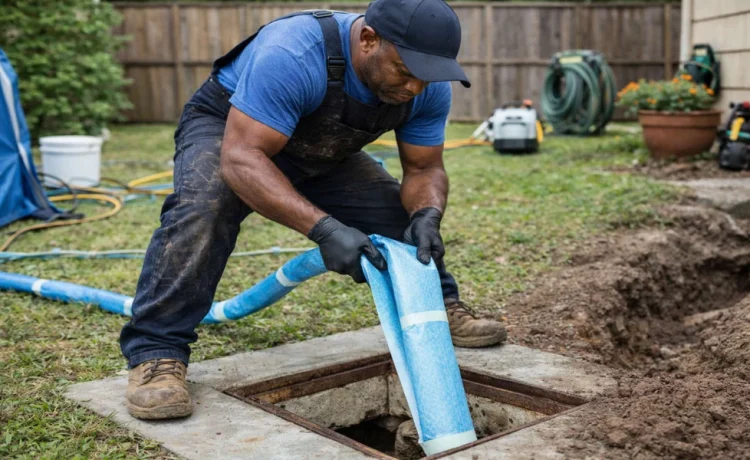
Pipe lining (cured-in-place pipe, or CIPP) is the less invasive option. A flexible liner coated in epoxy gets fed into your existing pipe, inflated, and then cured with steam or hot water until it hardens into a new pipe inside the old one. No digging beyond a couple of access pits. Pipe bursting is for pipes that are too far gone to line. A cone-shaped tool gets pulled through the old pipe, shattering it outward while simultaneously pulling a new pipe into place. It needs two access pits, but still no long trench.
So which one are you getting? That depends on what the camera finds. A sewer camera inspection comes first in every job, and it’s non-negotiable. You can’t price or schedule a repair you haven’t seen. Most reputable companies, including those offering trenchless sewer repair in Colorado Springs, will not quote a firm timeline until the camera has told them the pipe’s condition, the pipe’s length, and the location of the damage.
Here’s the thing about the inspection: it’s fast. Usually 30 to 45 minutes. But it’s the single most important step, because it determines whether you get the one-day lining job or the two-plus-day bursting job.
Real Timelines for Each Method
Let’s get specific, because “one to two days” doesn’t tell you what to plan for. Here’s the breakdown by method.
Pipe Lining (CIPP): 4 to 8 Hours of Active Work
The active work on a lining job is genuinely short. The crew arrives, sets up access points, cleans the pipe with a high-pressure jetter, pulls the liner through, inflates it, then cures it. The cure time is the variable. Standard epoxy cures run two to four hours depending on the pipe diameter and the ambient temperature. Total time on site, including setup and cleanup, lands between four and eight hours for a typical residential run of 50 to 100 feet.
Pipe Bursting: 1 to 2 Days
Pipe bursting is heavier. You need the bursting tool, a winch setup, and a new pipe on site. The actual bursting of a 50-foot line might take two hours, but the job is bigger. Access pits need to be excavated, the new pipe needs to be fused together (if it’s HDPE), and the whole system needs to be pressure tested before the crew backfills.
Realistic window: one full day for a simple run, two days if the line is long, has bends, or the soil is rocky. One thing worth knowing: a good crew charges by the job, not the hour. So the timeline matters for your schedule, not your bill. A slower cure doesn’t mean you’re being overcharged.
What Stretches the Timeline Out
Plenty of things can turn a one-day job into a two-day job, and it’s worth knowing them before you book, so you’re not blindsided.
- Root intrusion: If tree roots have wrapped around or entered the pipe, the crew needs extra time to cut them out before they can line or burst. Add two to three hours.
- Bellied or sagging pipe: A pipe that has settled and created a low spot can’t be lined. The crew may need to excavate a section anyway, which defeats part of the trenchless advantage.
- Access issues: If your cleanout is buried, the crew has to dig to find it first. That’s a surprise that costs a couple of hours.
- Municipal permits: Some cities require an inspection after the repair. In Colorado Springs, the permitting process typically adds a day if the work crosses into the right-of-way.
- Weather: The epoxy curing process doesn’t love cold temperatures. A crew can use accelerants, but a cold snap can still slow the cure.
My honest take: if a company quotes you a firm “one day” without seeing the camera footage first, that’s a red flag, not a convenience. The good ones tell you “one to two days, and here’s what would push it to two.”
The One Question That Decides Everything: Can Your Pipe Be Lined?
Here’s the decision framework that actually matters. Trenchless repair works on most pipes, but not all pipes. Knowing which side you’re on saves you from booking a crew that shows up, looks at the pipe, and tells you they need to dig anyway.
Lining works if your pipe is structurally intact but has cracks, corrosion, or leaking joints. It also works on cast iron, clay, and PVC. It fails if the pipe has collapsed, if there’s a belly, or if the pipe is severely offset at the joints. Bursting works if the pipe is beyond repair but the path is clear of other utilities and the ground is stable enough to pull a new pipe through.
Neither method works if your pipe is too deep, too shallow (less than 18 inches of cover), or if you have a septic system that needs different treatment entirely. And here’s the part nobody wants to hear: if your pipe has multiple collapses spaced far apart, the math sometimes favors traditional excavation just for cost reasons. Trenchless is usually cheaper, but not always. An honest estimator will tell you when digging is the better deal.
How to Plan Your Week Around the Repair
Good news: you don’t need to take a week off work. Here’s a practical planning sequence that keeps your life running while the crew does theirs.
- Book the camera inspection first, on its own day. It’s 45 minutes and gives you the real answer on method and timeline. Don’t combine this with the repair booking.
- Ask for a time window, not a start time. “We’ll be there between 8 and 10” is a real commitment. “Sometime in the morning” is not.
- Plan for one day of no water use. Even if the crew finishes in six hours, the city inspection might wait until the next morning. Have a backup plan for bathrooms.
- Mark your access points. If you know where your cleanout is, flag it. It saves the crew 30 minutes of probing.
- Clear the work path. Move sprinkler heads, lawn furniture, and anything the crew might snag. You want them working, not shoveling around your furniture.
The environmental angle matters too, and it’s a reason to prefer trenchless when you can. The U.S. Environmental Protection Agency has documented that traditional excavation disturbs far more soil and increases the risk of runoff and erosion on sloped properties. If your yard slopes toward a drainage ditch, trenchless is not just faster; it’s the responsible choice for your landscaping and your neighbors’ drainage.
A Note on Soil and Climate in the Pikes Peak Region
Colorado Springs sits on a mix of clay-heavy soil, decomposed granite, and areas with significant frost depth. That matters for timelines because clay expands and contracts with moisture, which is exactly what shifts pipes and causes joint separation over time. The frost depth in the region is about 36 inches, which is why your sewer line is buried deeper than it is in warmer states.
What does that mean for your repair? If the crew needs to excavate access pits in clay soil, the digging takes longer, and the pits need shoring for safety. If you’re in a newer development with sandy fill, the job goes faster. Ask your estimator which soil type you’re on; a local crew already knows, but hearing them say it confirms they’ve done their homework.
Interestingly, the broader trend is moving toward trenchless. The American Society of Civil Engineers has noted that trenchless rehabilitation now accounts for a growing share of municipal sewer repairs because it cuts street disruption and costs less than open-cut replacement when you factor in restoration. What cities have adopted for their streets is now standard practice for your yard.
So, How Long Should You Plan For?
Here’s your bottom line. For a straightforward pipe lining job, plan for a single day of active work plus a possible next-morning inspection. For pipe bursting, plan for two days. Add a buffer day if you have roots, old clay pipe, or a long run over 100 feet. That’s the honest timeline.
The best question you can ask, before you book anything, is this: “What would have to be true for this to take longer than you quoted?” A crew that answers with specific, plausible scenarios knows their stuff. A crew that says “nothing, we’re fast” is about to find out.