

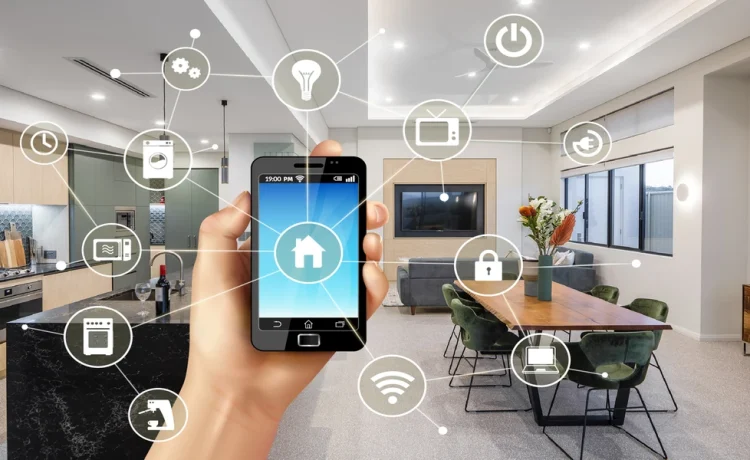
Forty percent of U.S. households already live in a smart home of some kind. Most of them still have no real idea what their HVAC system is doing between service visits. That gap, between connected devices and genuinely intelligent climate management, is exactly where the biggest changes are happening right now.
This is not a story about gadgets. It is a story about a fundamental shift in who controls your home’s heating and cooling, how much visibility you actually have, and what that means for your comfort and your utility bill. The technology has matured fast, and homeowners who understand the new landscape are making meaningfully different decisions than those who are still treating a smart thermostat like a fancy timer.
The Three-Layer Smart HVAC Stack
Most homeowners think of smart HVAC as one thing. It is actually three distinct layers working together, and understanding each layer changes how you shop, upgrade, and troubleshoot.
Layer 1: Control. This is the smart thermostat itself. Devices like the Ecobee SmartThermostat Premium or the Google Nest Learning Thermostat sit here. They learn your schedule, respond to occupancy sensors, and connect to your utility’s demand-response programs. The control layer is mature and widely adopted.
Layer 2: Monitoring. This is where things get more interesting. Dedicated air quality monitors, duct pressure sensors, and connected filter-life trackers feed real data back to you and, increasingly, to your HVAC contractor. You are no longer guessing whether your filter needs changing. The device tells you, and often tells your service provider before you even think to call.
Layer 3: Integration. This is the emerging frontier. When your thermostat, your air quality monitor, your home automation hub, and your contractor’s service software all talk to each other, the system stops being reactive and starts being predictive. A compressor running hotter than baseline on a Tuesday in July can trigger a service alert before it fails on a Friday night.
Most homeowners are solidly in Layer 1. The ones getting the most value are starting to build into Layer 2. Layer 3 is where the professional relationship matters most, because the data only helps you if someone qualified is reading it.
What the Numbers Actually Say About Smart Thermostats
There is a lot of marketing noise around smart thermostat savings claims. Cutting through it matters. According to the U.S. EPA’s ENERGY STAR program, certified smart thermostats deliver savings of approximately 8% on heating and cooling bills, verified through real field installations across the country, not lab estimates. That baseline is conservative by design, because the EPA requires manufacturers to prove savings across diverse climates and usage patterns before certification is granted.
Here is a snapshot of how the main smart HVAC control options compare on the dimensions that actually matter for a typical homeowner:
| Control Type | Learning Capability | Remote Access | Air Quality Integration | Utility Program Compatibility |
|---|---|---|---|---|
| Basic programmable thermostat | None | No | No | No |
| Wi-Fi thermostat (non-learning) | None | Yes | Rarely | Some |
| Learning smart thermostat (e.g., Nest, Ecobee) | Full | Yes | Limited (with add-ons) | Yes, most programs |
| Smart thermostat + air quality sensor system | Full | Yes | Full | Yes |
The jump from a basic programmable to a full smart thermostat-plus-sensor system is substantial. But the table also makes something else clear: the air quality integration column is where most homeowners are leaving value on the table.
Why Air Quality Is the Missing Piece Most Smart Home Setups Ignore
A smart thermostat can tell your HVAC when to run. It cannot tell you what the air it is circulating actually contains. That distinction matters more in certain climates and regions than in others.
Consider a home in a city like Aurora, Colorado, where seasonal temperature swings mean systems run hard in winter and summer both. Tight building envelopes hold heat efficiently, but they also trap particulates, VOCs from household products, and humidity imbalances that a thermostat alone is blind to. Homeowners in that situation, and plenty of others like them, are starting to pair their connected devices with indoor air quality services in Aurora precisely because the tech layer and the professional service layer are complementary, not substitutes for each other.
The monitor tells you a number. A trained technician tells you what that number means, what is causing it, and how to fix it at the system level rather than just cracking a window.
“Homeowners generally don’t understand how programmable thermostats work and may not program them at all, which can lead to higher utility bills. Smart thermostats, by contrast, are designed to learn user preferences and automatically adjust settings based on occupancy and indoor and outdoor temperature.”
– U.S. EPA ENERGY STAR Connected Thermostat documentation
That quote captures the gap precisely. The smart device removes the burden of manual programming. But it cannot replace the judgment of a professional who has actually looked at your ductwork, your equipment age, and your home’s specific load profile.
A Practical Upgrade Path That Does Not Require Starting Over
You do not need a whole-home renovation to build a smarter HVAC setup. Here is a realistic sequence that works for most existing homes:
- Audit your current system first. Before buying any hardware, know what you are working with. A professional assessment tells you whether your equipment can support zoning, what your current air quality baseline looks like, and whether there are duct issues that will limit any smart control’s effectiveness.
- Install a learning thermostat. Pick one that works with your utility’s demand-response program if your provider offers one. The compatibility saves money and reduces grid strain during peak periods.
- Add a standalone air quality monitor. Place it in the room where your family spends the most time. Run it for 30 days before drawing conclusions. You want to see patterns, not snapshots.
- Connect your devices to a central hub if possible. Apple Home, Amazon Alexa routines, and Google Home all support thermostat integration. The goal is having one place to see your whole picture.
- Schedule professional follow-up after 90 days. Bring the data from your monitor to the appointment. A good technician will use it. If yours does not know what to do with air quality readings, that is useful information too.
The U.S. Department of Energy notes that homeowners can save up to 10% per year on heating and cooling by adjusting their thermostat 7 to 10 degrees Fahrenheit for 8 hours a day, which is exactly the kind of schedule a learning thermostat automates without you thinking about it. The case for upgrading is not complicated. The execution is where people stall.
The Role of the Professional Is Getting More Technical, Not Less
There is a persistent belief that smart home technology will eventually make HVAC contractors less necessary. The opposite is proving true. As systems generate more data and homeowners become more aware of what that data implies, the demand for technicians who can interpret it and act on it is growing.
Connecting a smart thermostat takes an afternoon. Diagnosing why your air quality monitor is spiking every time the furnace cycles, tracing it to a cracked heat exchanger in a 12-year-old unit, and specifying the right replacement requires expertise that no app currently provides. The technology raises the ceiling on what a good professional relationship can deliver. It does not lower the floor on what needs one.
The homeowners getting the most out of smart HVAC are not the ones who bought the most hardware. They are the ones who combined the right hardware with the right professional support at the right moments.
So the real question is not which smart thermostat to buy. It is whether your current setup, devices and service relationship together, is actually giving you a complete picture of what is happening inside your home. If the answer is no, that is the gap worth closing first.