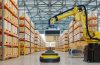


These days, the pressure on warehouses has reached an all-time high. Orders are larger. Delivery times are shorter. Labor is harder to find. Warehouse automation is the solution businesses are adopting to match up with the demand.
Automation is no longer a nice-to-have. This is an immediate response to increasing interest and decreasing margins.
What are Warehouse Automation Solutions?
Warehouse automation solutions employ technology for carrying out warehouse operations with minimum or no human assistance. This comprises the steps such as movement, storage, picking, sorting, and tracking of the goods.
The goal is simple. Reduce human effort where possible. Improve warehouse operations for more speed, accuracy, and consistency.
Automation supports people. It does not take the place of smart processes.
The Importance of Automation in Modern Warehousing
Manual systems struggle under scale. The more you lean on a faulty system, the larger the errors pile up.
Companies implement warehouse automation solutions for many different reasons such as the following:
- Improve order accuracy
- Speed up fulfillment
- Lower operating costs
- Reduce dependency on labor
Automation: When you need to have a hold of rapid environments.
Prime Areas Where You Experience Automation Effects
Warehouse automation is not one-size-fits-all. Apply the solutions, where it makes the biggest impact.
Common areas include:
- Automated storage and retrieval systems
- Conveyor and sortation systems
- Barcode and RFID tracking
- Picking and packing automation
Warehouse automation solutions focus on eliminating lags and bottlenecks with your daily workflows.
How Warehouse Automation Improves Efficiency
Efficiency comes from consistency. With automation, the same task is executed in the exact same manner each and every time.
For example:
- Automated picking reduces mis-shipments
- Real-time tracking improves inventory accuracy
- Faster sorting cuts processing time
Thanks to warehouse automation solutions, operations run more efficiently even amid soaring demand.
Benefits Beyond Speed and Accuracy
Automation gives more than just quick orders
Additional benefits include:
- Better use of warehouse space
- Improved worker safety
- Scalable operations during growth
- Clear performance data
These lasting differences ensure warehouse automation solutions are a long-term play.
Common Challenges to Expect
Automation works best with planning. Rushed implementation causes problems.
Typical challenges include:
- High upfront costs
- Integration with existing systems
- Re-training employees to use new technology
A phased, flexible warehouse automation solution that mirrors actual operational demands is ideal.
How to Go About Picking the Right Warehouse Automation Solutions
Full automation is not suitable for all kinds of warehouses. It all begins with assessment − the best way to build.
Here are some factors to consider when choosing warehouse automation solutions.
- Scalability for future growth
- Compatibility with current systems
- Reliable support and maintenance
- Clear return on investment
Automation should make things less complex, not more complex.
The Future of Warehouse Operations
Rising customer expectations is making manual warehouse outdated. In uncertain markets, automation brings resilience.
Creating warehouse automation solutions enables the businesses to respond quickly, allow lean operation, and gives them the advantage to compete confidently. Instead of bottlenecks, they transform warehouses into performance centers.
Conclusion: Automation is About Control
The actual worth of automation is control. Control over speed. Control over accuracy. Control over cost.
Business is no longer forced to react to demand when they properly have the right warehouse automation solutions, but instead manage it − accurately, and with expediency. They get reliability even at peak times, where manual systems typically fail. Such a level of control results in progressively robust operations that will scale without having the reputation of being unreliable.